
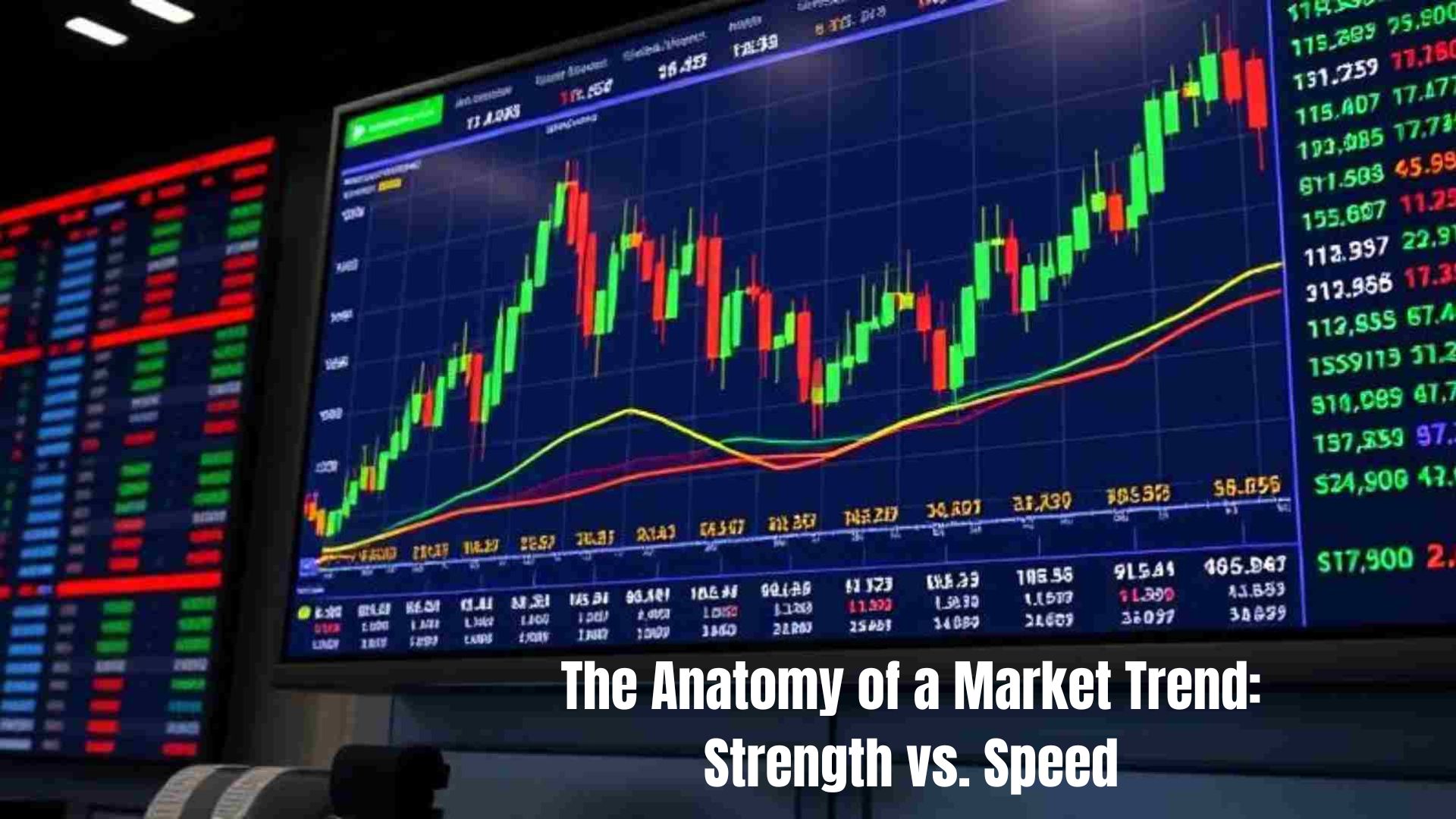
In the heat of a trading session, a vertical green candle is often the most intoxicating thing a trader can see. It triggers an immediate emotional response: Fear of Missing Out (FOMO). However, one of the most expensive mistakes a trader can make is confusing speed with strength. While they might look the same on a surface level, understanding the difference is the ultimate tool for risk management.
Speed: The “Sprint” and the Exhaustion Move
When a price moves very fast in a short period, it is often referred to as “velocity” or “parabolic” movement. While this can be profitable, it is frequently a sign of an Exhaustion Move.
Think of a sprinter. A sprinter can move incredibly fast, but they can only maintain that pace for a very short distance before they run out of oxygen. In the markets, speed often comes from:
-
Panic Buying/Short Covering: Traders rushing to exit bad positions.
-
News Reactions: Temporary spikes based on a single headline.
-
Low Liquidity: Price jumping because there aren’t enough sellers.
The problem with speed? It’s unsustainable. When the “sprint” ends, the price often crashes just as quickly as it rose because there is no solid “floor” of buyers supporting the move.
Strength: The “Marathon” of Trend Sustainability
True market strength is characterized by a steady, rhythmic progression. Instead of a vertical line, a strong trend looks like a staircase.
A strong trend is built on:
-
Healthy Pullbacks: Brief pauses that allow new buyers to enter the market, creating higher lows.
-
Volume Confirmation: Increasing participation as the price moves in the direction of the trend.
-
Structural Support: The price respects previous resistance levels and turns them into support.
A strong trend might not be as “exciting” as a vertical spike, but it is much more reliable for long-term capital growth.
Why This is the Ultimate Risk Management Tool
If you can identify that a move is driven by pure speed rather than underlying strength, your entire approach to risk changes:
-
Avoid Late Entries: You won’t buy at the “top” of a vertical move because you recognize it as an exhaustion point.
-
Tighten Stop Losses: If you are in a high-speed move, you know the reversal will be sharp. You move your stops up aggressively to lock in profits.
-
Better Position Sizing: You can trade larger in a “strong” trend and smaller (or not at all) in a “fast” but weak trend.
How Navexx.ai Decodes Trend Quality
The human eye is easily fooled by the “flashiness” of a fast move. That is why we built navexx.ai to look beneath the surface.
Our AI doesn’t just look at where the price is; it looks at how it got there. Here is how navexx.ai helps you differentiate:
Volume-Price Divergence Detection
The navexx.ai engine constantly monitors the relationship between price action and participation. If the price is spiking on thinning volume, our tools flag it as a potential exhaustion move, saving you from a “bull trap.”
Momentum Sustainability Scores
We use proprietary algorithms to calculate the “velocity-to-strength” ratio. If a move is moving too fast to be sustainable, navexx.ai provides the clarity you need to wait for a better entry or exit your current position.
Structural Mapping
Instead of messy charts, navexx.ai highlights the true structural support levels. This allows you to see if a trend is building a “staircase” or if it’s a “house of cards” waiting to fall.
Stop Chasing. Start Analyzing.
Don’t let a fast-moving chart dictate your emotions. By understanding the anatomy of a trend, you transition from a gambler to a professional.
Let the AI do the heavy lifting of trend analysis for you. Discover the true strength of the market today at navexx.ai.
